


If you’ve ever considered vaginal or rectal dilation before, you’re probably familiar with dilators. Or perhaps someone recommended dilation to you, and now you’re wondering what dilation is all about. You’ve come to the right place!
Dilators are useful tools designed for a variety of needs! They are able to be safely inserted into the vagina or rectum, and can help with conditions like vaginismus, constipation, menopause, vaginal atrophy, painful sex, and more.
They are great for recovery from a number of different pelvic surgeries, and can simply help make insertion more comfortable, even if the above-mentioned conditions don’t necessarily apply to you.
If you didn’t know already, dilation involves the process of inserting a dilator into the vagina or rectum in order to gently stretch the area’s tissues, thus reducing tension and improving your ability to handle insertion without pain.
In general, you’d start with a small size, and would practice with that size for a time (which can be days, weeks, or longer depending on your consistency and personal needs) until you are completely comfortable with it. Then you’ll switch to a slightly bigger size, and repeat.
You’ll continue switching to progressively larger sizes over time until you reach your size goal. Everyone’s size goal will differ depending on their needs and dilation purpose. The process sounds simple, but in reality it can be a bit confusing or complicated for those who struggle with insertion.
Struggling with insertion can mean many things: pain, resistance in terms of muscle tension or vaginal canal lengthening (which is part of the arousal process), bodily awareness, and even the integrity of the skin.
Even just choosing a dilator to get started may seem difficult, too. Don’t worry, I’m here to help clear the confusion!
Dilators come in all different shapes, sizes, materials, colors, and types. Some have vibration features, some are available in sets, and some come with extra parts (handles, covers, etc.).
What’s most important to know is that your dilation needs will decide what dilator is best for you. Let’s first talk about some of the different features that dilators can have…
Dilator Shapes:
There aren’t actually that many shapes for a dilator to take, but they can vary depending on where they’re being inserted.
Vaginal dilators are straight, tube-shaped, and usually tapered at the tip for comfortable insertion. They typically include a base and can often be paired with a handle that can make insertion easier.
Rectal dilators are often shaped similarly to vaginal dilators, but in many cases may have a lava lamp shape designed specifically for stretching the muscles of the anal canal.
Rectal dilators also always have a wide base or handle to prevent the possibility of losing them during use. That’s right—the anal canal can create a suction that may pull the dilator in if there is no flared base to prevent it from entering fully. Therefore, it is very important that you choose your dilators carefully.
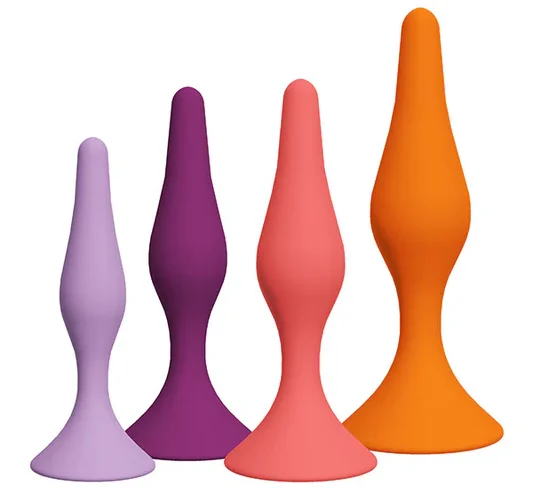
In some cases, I may recommend my patients try vaginal dilators for their rectal dilation, as the shape of a vaginal dilator is better at gently stretching the anal sphincters. Everyone’s needs can vary, so I highly recommend you speak with a pelvic floor physical therapist such as myself to understand what your pelvic floor’s needs truly are.
We’ll talk more about what a pelvic floor therapist is and how working with a professional can be very useful later in this blog. For now, let’s keep exploring other dilator features…
Dilator Sizes:
Both rectal and vaginal dilators are typically measured by length and diameter (or in some cases, circumference). In the case that a dilator is lava lamp shaped, a brand may only provide the diameter of the widest point.
Vaginal dilators can range from very small (the size of a pinky) to sizes as large as 7.5 inches in length. For rectal dilators, the diameter often matters a bit more, and can range by brand. No matter the type of dilator, they typically increase in both length and diameter as you move up in size.
Understanding Your Needs and Options
When it comes to sizing, everyone’s needs can vary widely. You may not necessarily need an entire set of dilators, as this may not fit your body’s needs or your budget.
When it comes to budget, it is important to have an honest conversation with your provider so that they can help you find a dilator set that is the perfect fit. It may help to know that some companies offer medical assistance programs for payment, and some dilators are even HSA and FSA eligible!
Dilators can be pricey, but luckily many brands offer individual sizes as well as dilator sets to help suit a variety of needs. Some brands offer full sets (includes many different sizes) and smaller sets (only a handful of sizing) to provide only what an individual may actually use. Sometimes these are grouped by size (small, medium, or large) or they may just be a basic range of sizes.
Some brands may offer a wide dilator size range, which can help with a slow and gradual dilation, and others offer less size availability, which can result in a more steep size change between each dilator.
As you can see, the size range and availability of dilators can vary. Not every brand has a wide size range, but may offer better affordability, so be sure to weigh your options and consider what you really need. This can be discussed with your physical therapist as well, who can even help you decide on sets that fit both your immediate needs and current budget!
Dilator Materials:
Most often, dilators are available in a medical-grade plastic or silicone. There are other types, but because they are less common and not always suitable for everyone, we’ll jump into those types last. So, let’s look at the main two types:
Silicone Dilators
Silicone dilators are slightly flexible and usually have a wider range of sizes with most brands. Silicone is usually a better choice for individuals who are a bit more wary of trying dilation, but you’ll have to be careful about the type of lubricant you use with them (silicone lubricants will break down silicone dilators).
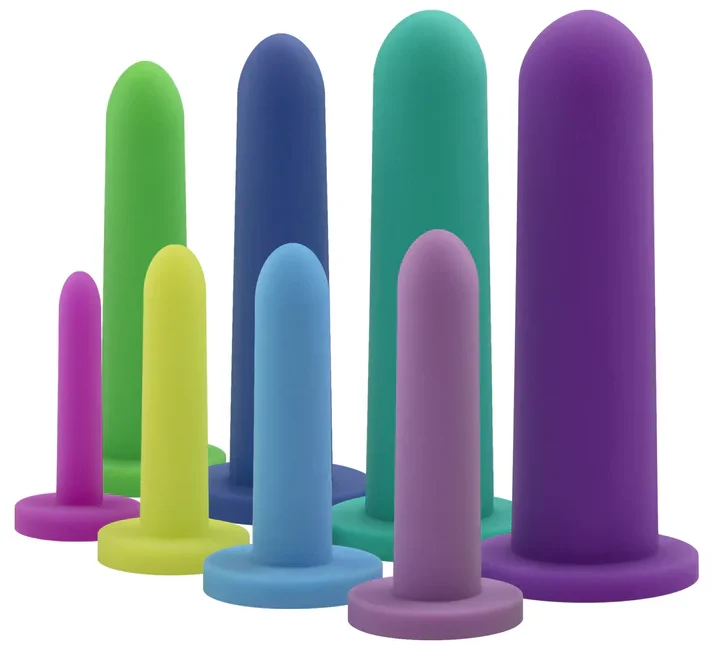
Plastic Dilators
Plastic dilators on the other hand are much more rigid and may have less availability in terms of sizing. However, they can be used with any type of lubricant and are often more affordable.
Additionally, some individuals with certain conditions or needs will be better suited to plastic dilators due to their rigidity. This can include:
- Those with vaginal stenosis
- Those who have undergone genital reconstruction
- Those who have experienced radiation therapy
Other Dilators
There are actually other types of dilators outside of the more common silicone and plastic options. Some are made of glass, which are more rigid and nonporous. They can be used with silicone or water based lubricants.
Other dilators are made with unique features, such as vibration, expandability, and even those with magnets inside. There’s surprisingly a variety of dilator options out there, so you may find yourself with many to choose from.
If it becomes overwhelming, there’s no need to worry—your pelvic floor therapist can help provide guidance.
Provider Suggestions
Your primary provider or surgeon may suggest dilation for your condition or symptoms, which is awesome! Unfortunately, many do not consider dilation or even know about it—so be sure to advocate for yourself and communicate your interest in dilation.
Oftentimes, patients may have to seek out a pelvic floor physical therapist on their own. If you find yourself in this situation, check out this Ebook I wrote called How To Get the Most Out of Pelvic Floor Therapy. It has all kinds of helpful information on what to expect from treatment and how to find a provider that’s right for you!
How to Get Started
Like I mentioned before, dilation can sound very simple, but once you begin, you may find yourself confused or wondering if you’re going about it correctly. Or perhaps you’ve read about all the different dilation features above, but still don’t really know what your own needs are. That’s totally okay! I’m here to help.
First, you may want to get an idea of what size dilator you’ll need to start with. For rectal dilation, it is typically recommended to start with the smallest size and work your way up until you’ve reached your desired goal; this can look like better function, less symptoms, or less painful sex.
For vaginal dilation, your starting dilator size depends on your current size tolerance. If you’re someone who can insert a tampon without pain, but struggle with penetrative sex or sexual aids, you don’t necessarily need to start from the smallest size. You could choose a set with dilators that are closer in size to your tampon, a sexual aid, or your partner’s penis.
For others, any form of insertion may be difficult. If this is the case, and even a finger is painful or uncomfortable, you’ll want to start with a very small size. Or, when in doubt, anyone can start using the smallest size.
It can also help to get an idea of your goal size. Are you looking to be able to simply insert a menstrual item, or are you trying to make penetrative sex less painful? Your end goal can be a size similar to or slightly bigger than the “goal” you are trying to match.
That can be a tampon, a sexual aid, or your partner’s penis. Be sure to consider the circumference or diameter of these items and not just the length when determining your goal size.
Some individuals won’t necessarily have an obvious end goal size. For example, you may be using dilation to relieve urinary, bowel, or sexual dysfunction symptoms, which isn’t simply achieved by a specific size. In this case, you would continue dilating until your symptoms have significantly decreased or completely ceased.
As for the other aspects of choosing a dilator, it all comes down to preference and need. While choosing a dilator shape may seem straightforward, you never know when you might actually need something different.
As mentioned earlier, there are some cases where individuals may benefit from using vaginal dilators rectally. Additionally, even if you think you only need to dilate vaginally, you may actually have a need to dilate rectally. Working with a pelvic floor physical therapist can help clear up your pelvic floor’s needs.
In fact, choosing a dilator can depend on a lot of different needs: your pelvic floor’s needs, your individual goals, your budget, your comfort level, where you’re starting from and where you expect to end in terms of size.
So, with these different needs in mind, let’s talk about how a pelvic floor physical therapist can help you choose a dilator and support you on your entire dilation journey.

Why You Should Consider Physical Therapy
While the tips found in this blog can help you get started, the best way to determine what your needs are is by seeing a pelvic floor physical therapist—like me, Dr. Laura Meihofer. Stay with me here! There are many other aspects of dilation you will need to consider outside of just the tool itself.
This can include how to dilate, how long to dilate, how frequently to dilate, what it should feel like, and how to tell if you’re ready to progress to the next size. Then there’s also dilation exercises, which can involve contracting and relaxing your pelvic floor during the dilation process. And if you’ve tried dilation, you may have come across problems such as the following:
- When you try to insert the dilator, you hit a “wall”
- You feel comfortable with your current size, but cannot insert the next size
- You experience pain with the act of insertion, but not when the dilation is already inserted and stationary
- Any form of touch is painful, even just trying to insert hurts
- You struggle mentally with the idea of dilation—it feels wrong, your partner doesn’t understand, or you struggle with past traumas
In any of these situations, you should most certainly seek professional guidance. A pelvic floor physical therapist can provide thorough guidance and support during your dilation journey.
You may be wondering, “What’s a pelvic floor physical therapist, and what is a pelvic floor?” A pelvic floor physical therapist has extensive training, education, and experience with the pelvic floor—a group of muscles found in your pelvis that are directly related to the dilation process.
The pelvic floor envelopes all your pelvic organs, including your vaginal canal and rectum. These muscles are what allow you to use the restroom and enjoy sex.
If you’re looking to relieve symptoms of sexual, urinary, or bowel dysfunction with dilation, it is highly likely you may have some form of pelvic floor dysfunction. Vaginismus, painful sex, constipation, menopause, and many other conditions are strongly linked to pelvic floor dysfunction.
Experiencing dysfunction can make dilation confusing and frustrating. Perhaps you’ve already tried dilation before and didn’t find much success… but don’t give up!
Together, we can create a dilation plan that best suits your individual needs and goals. Pelvic floor physical therapy can greatly support your dilation journey by helping you identify your needs, providing clear instruction for the dilation process, and giving you a boost of confidence that you may not even know you needed.
No matter if you are looking to be able to use menstrual products again, engage in pelvic exams without fear, or restore your sex life, I am here to help with all your dilation needs! I accept patients of all ages and gender identities, and offer sessions both virtually and in-person. You can start your dilation journey by making an appointment!
While I’m happy to help you at your appointments, you can also check out my online content for additional dilation information. Feel free to explore my dilation videos on Youtube for more helpful guidance!
This blog may contain links to affiliate products recommended by Dr. Laura Meihofer. If you purchase a product through an affiliate link, your cost will be the same, but Laura will automatically receive a small commission. Your support is greatly appreciated!